English
Policy
Please click on the image to view our English policy.
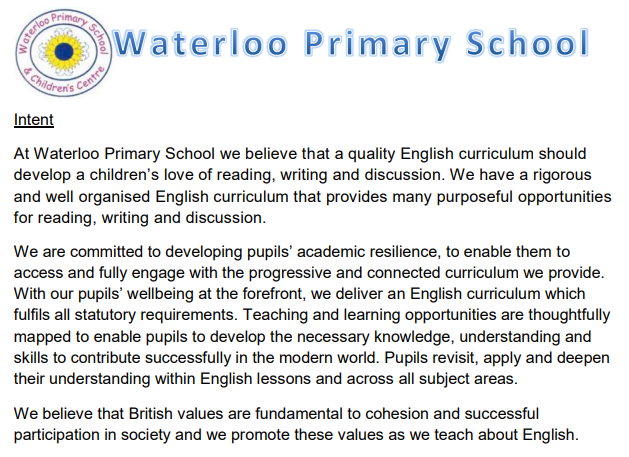
Curriculum Overview

Read Write Inc.
We have written this for parents. It explains how we teach reading using the Read Write Inc. programme.
Learning to read is the most important thing your child will learn at our school. Everything else depends on it, so we put as much energy as we possibly can into making sure that every single child learns to read as quickly as possible.
We want your child to love reading – and to want to read for themselves. This is why we put our efforts into making sure they develop a love of books as well as simply learning to read.
How will my child be taught to read?
We start by teaching phonics to the children in the Reception class. This means that they learn how to ‘read’ the sounds in words and how those sounds can be written down. This is essential for reading, but it also helps children learn to spell well. We teach the children simple ways of remembering these sounds and letters. Ask them to show you what these are.
The children also practise reading (and spelling) what we call ‘tricky words’, such as ‘once,’ ‘have,’ ‘said’ and ‘where’.
The children practise their reading with books that match the phonics and the ‘tricky words’ they know. They start thinking that they can read and this does wonders for their confidence.
The teachers read to the children, too, so the children get to know all sorts of stories, poetry and information books. They learn many more words this way and it also helps their writing.
More information will be uploaded in September 2026, as we start our new term with Read, Write Inc.
Phonics Glossary
We hope the following glossary is useful to you to support your child with their reading and Phonics. Always feel free to come in and talk to us if you require any further support.
‘Special Friends’
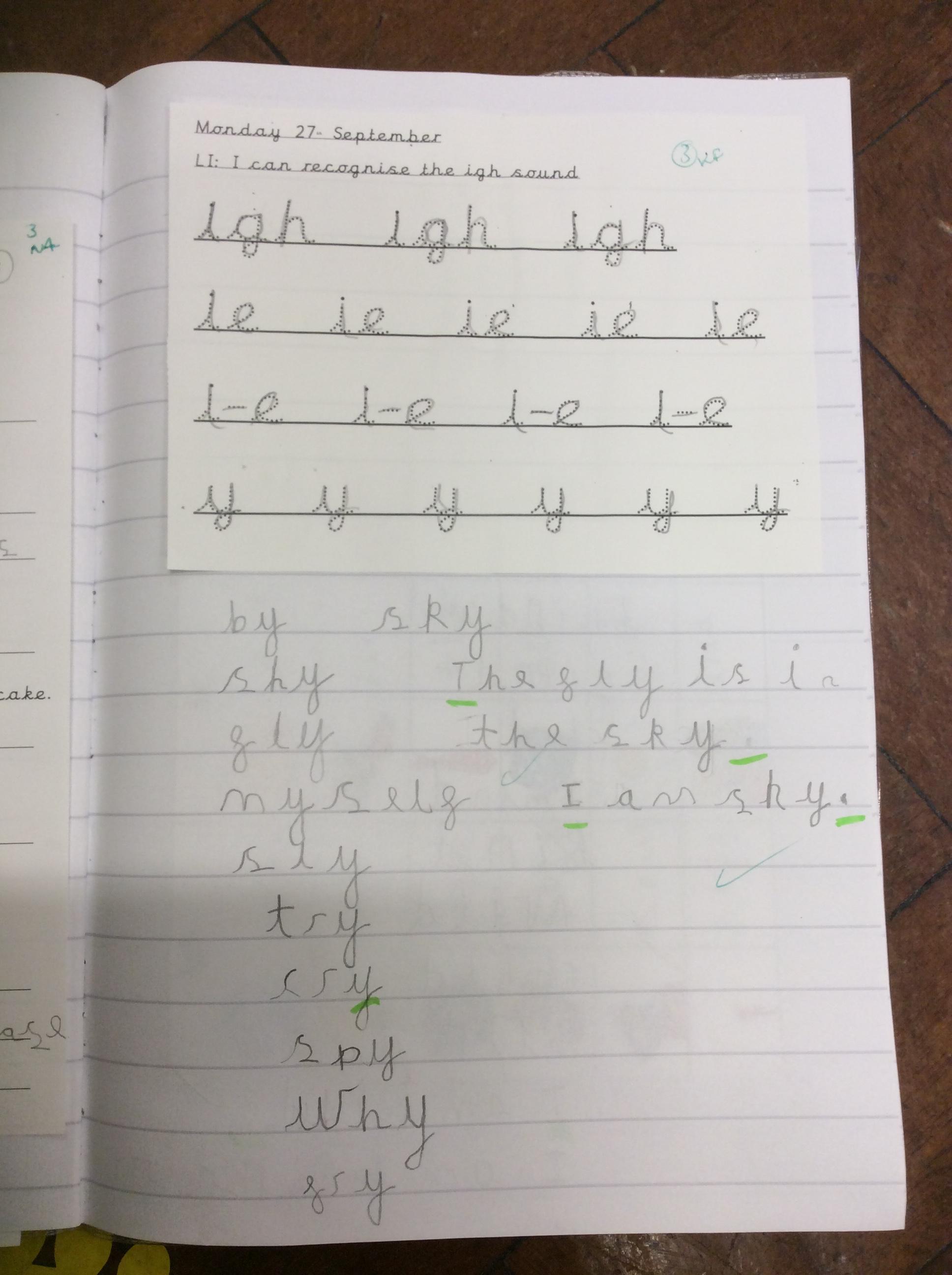
Special friends are a combination of two or three letters representing one sound, e.g. ck, ay, igh, oa.
Fred Talk
Fred the Frog helps children read and spell. He can say the sounds in words, but he can’t say the whole word, so children have to help him.
To help children read, Fred (the teacher) says the sounds and then children say the word.
For example, Fred says c-a-t, children say cat, Fred says l-igh-t, children say light.
Teachers are encouraged to use Fred Talk through the day, so children learn to blend sounds.
For example:
Play Simon Says: Put your hands on your h-ea-d/ f-oo-t/ kn-ee.
Put on your c-oa-t/ h-a-t/ s-c-ar-f.
Set the table with a b-ow-l/ f-or-k/ s-p-oo-n.
‘Fred in your head’
Once children can sound out a word, we teach them to say the sounds silently in their heads.
We show them how to do this by:
1. whispering the sounds and then saying the whole word;
2. mouthing the sounds silently and then saying the whole word;
3. saying the whole word straight away.
Phonics: How to pronounce pure sounds | Oxford Owl
Learn how to pronounce all 44 phonics sounds, or phonemes, used in the English language with these helpful examples.
Phonics Screening Check

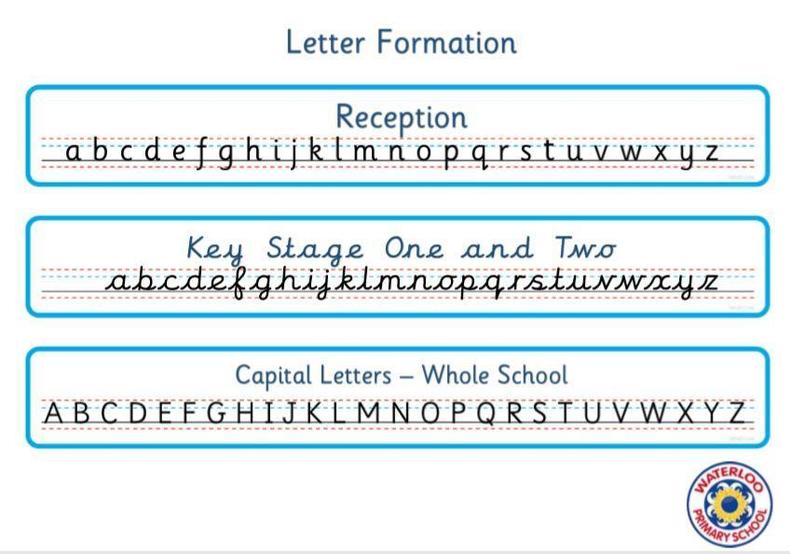
Letter Formation
Please see the image below for our letter formation expectations, as described in our Handwriting Policy.
Spelling
In Reception and Year 1, the children will be learning how to read and spell through learning phonics.
From Year 2 upwards, once a child is secure Phase 5, we begin to teach children how to spell using different strategies, through our spelling programme 'No-Nonsense Spelling'.
This scheme offers an accessible, clear progression in the teaching of spelling. The focus of the programme is on the teaching of spelling which embraces knowledge of spelling conventions - patterns and rules; but integral to the teaching is the opportunity to promote the learning of spellings, including statutory words, common exceptions and personal spellings.
Our teachers deliver daily spelling lessons and we teach children how to spell using different strategies. We give the children approximately 6-8 spellings each week to practise during lessons and at home - these are words they have been finding tricky when writing in class. Spellings are tested weekly across Key Stage 1 & 2.
Click the document below to find out about the different strategies your child uses to practise spellings. These can be used to support learning spellings at home.

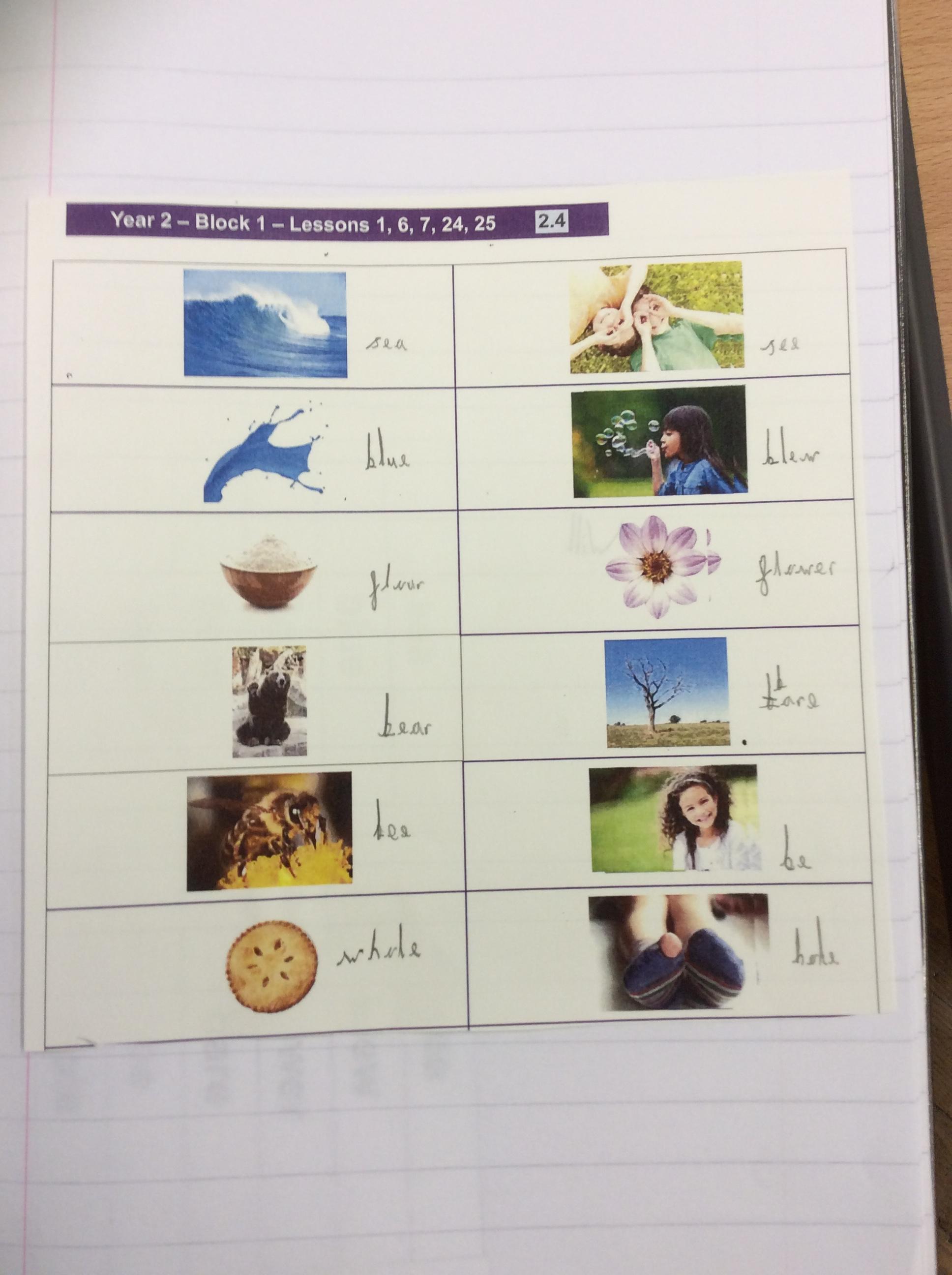
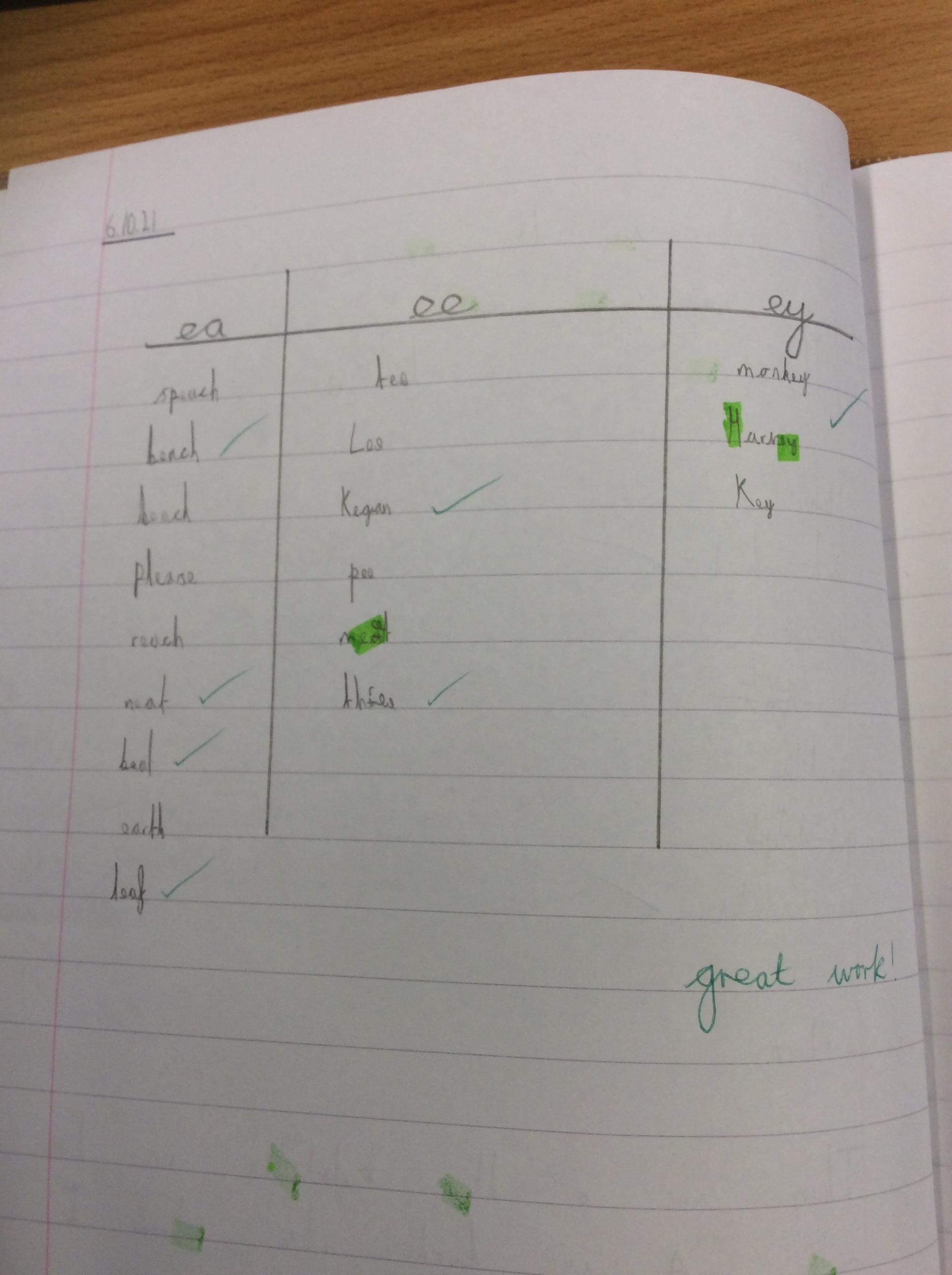
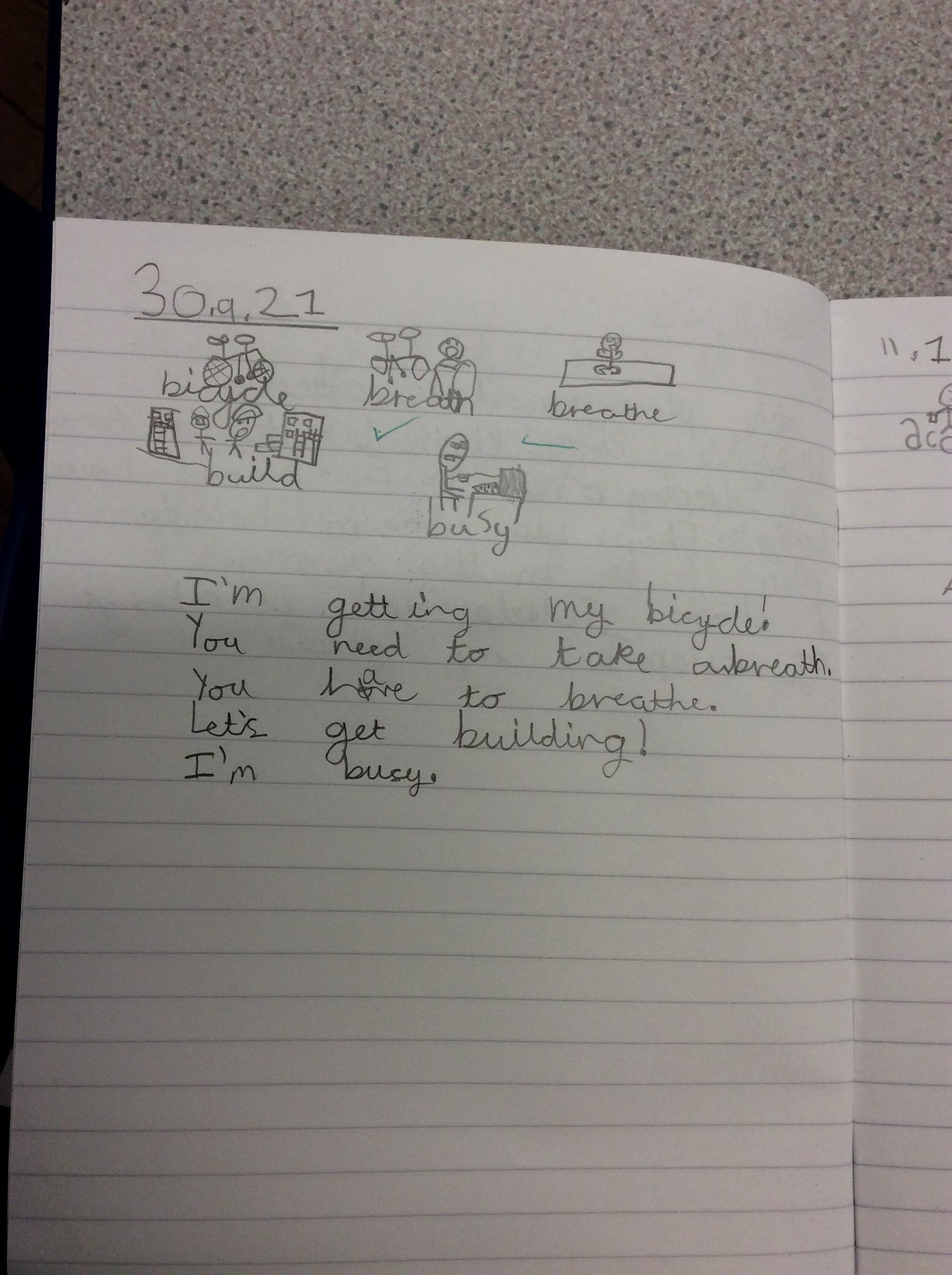
Spellings and Phonics work

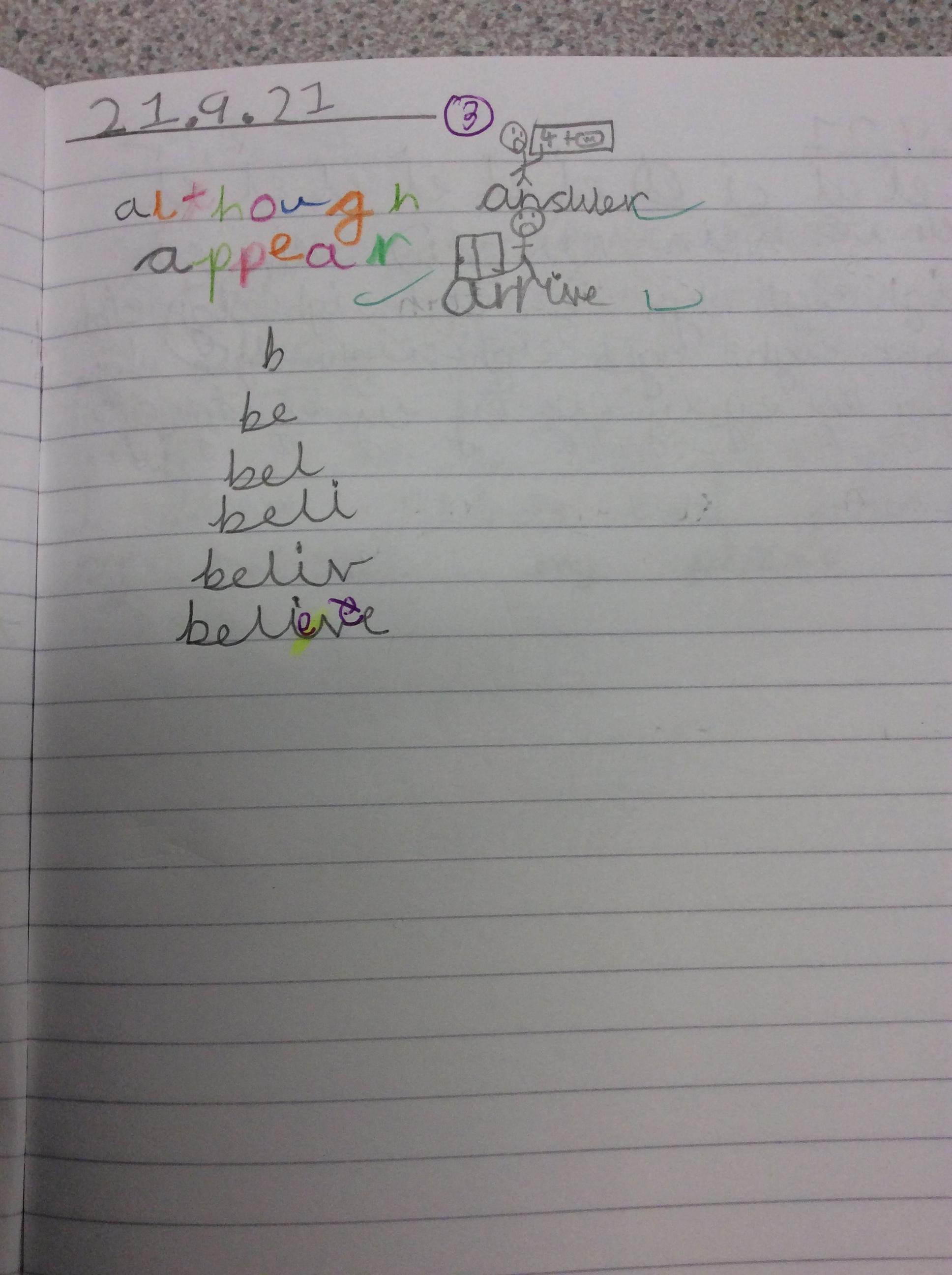

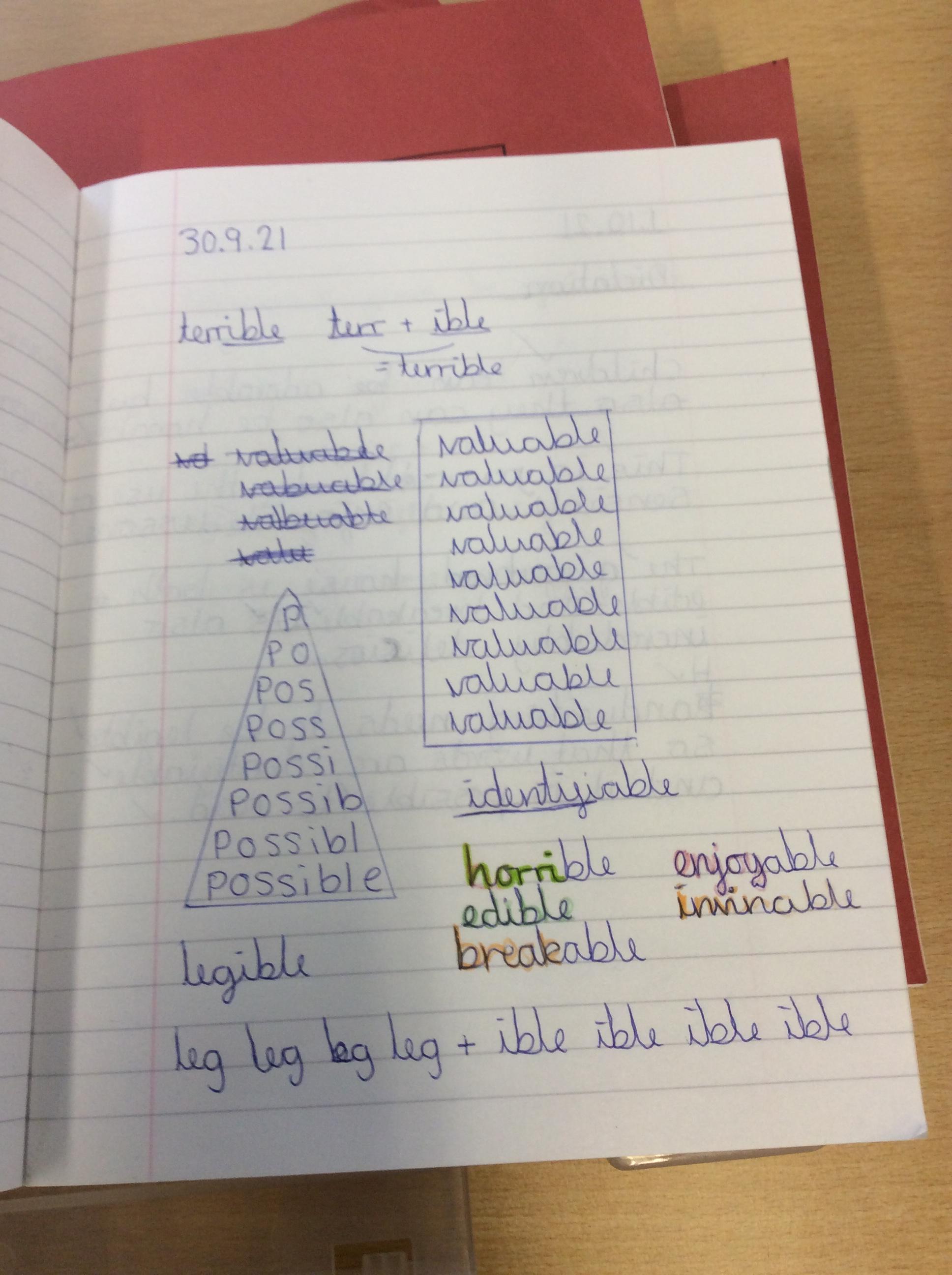
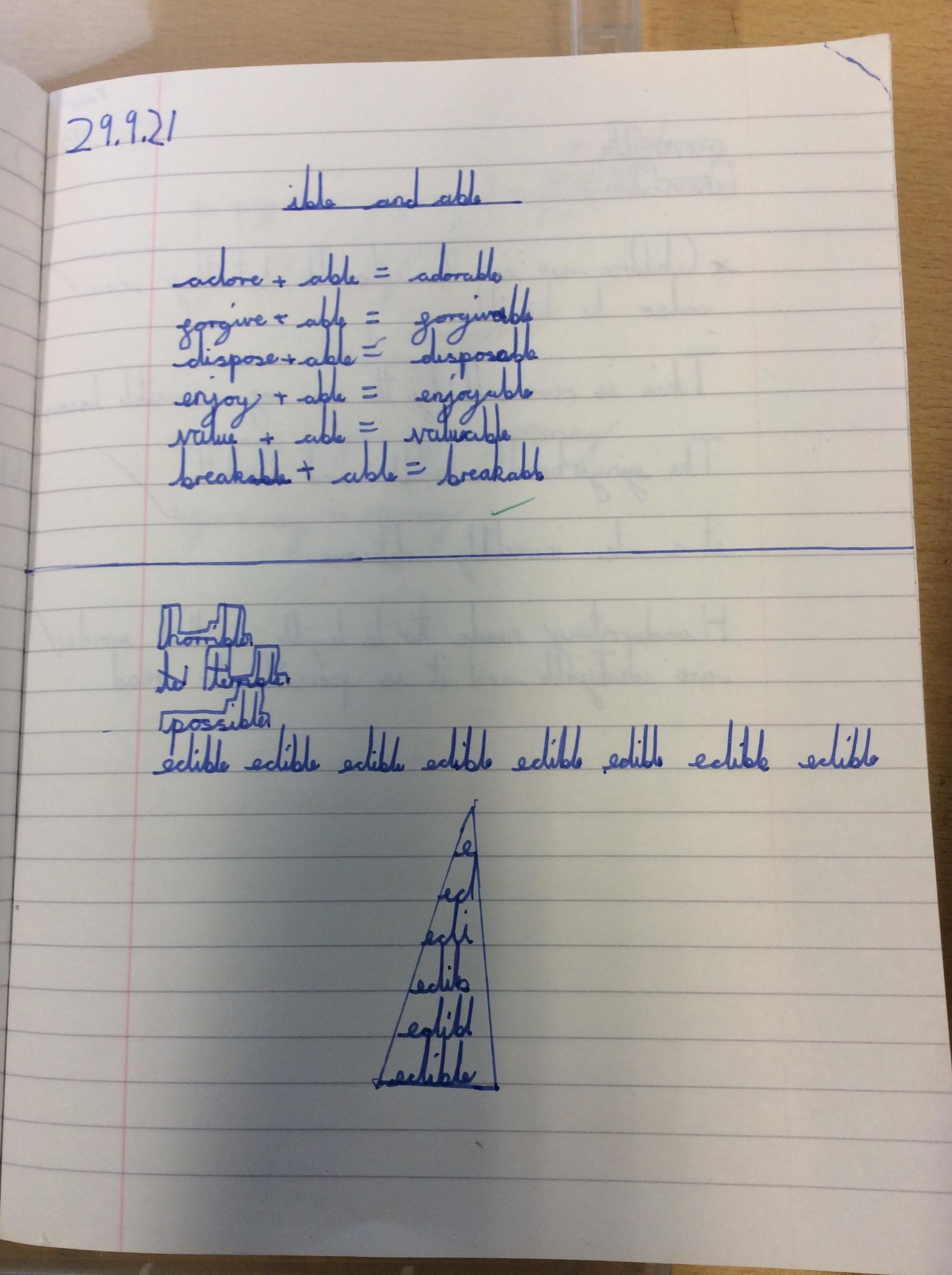
Phoneme Mat
When writing, children are encouraged to use our phoneme mat to support them with their spellings. This is easily accessed from our class help desks.
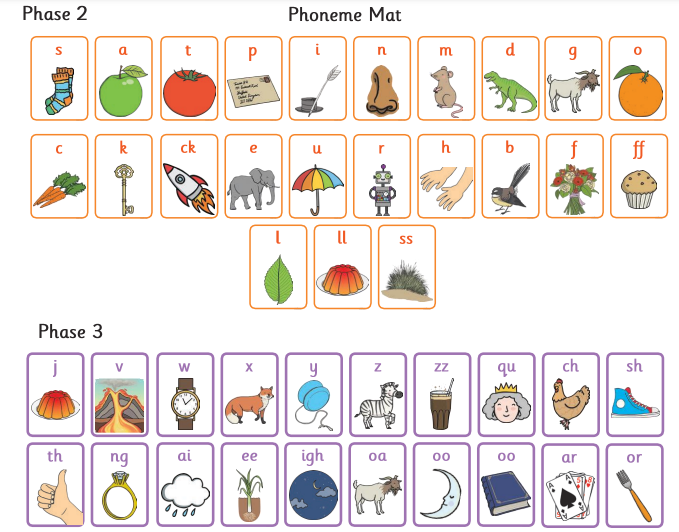
Year Group Spelling Lists
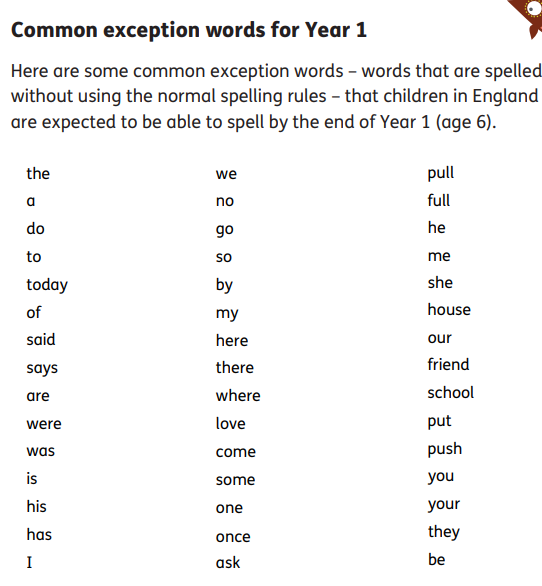
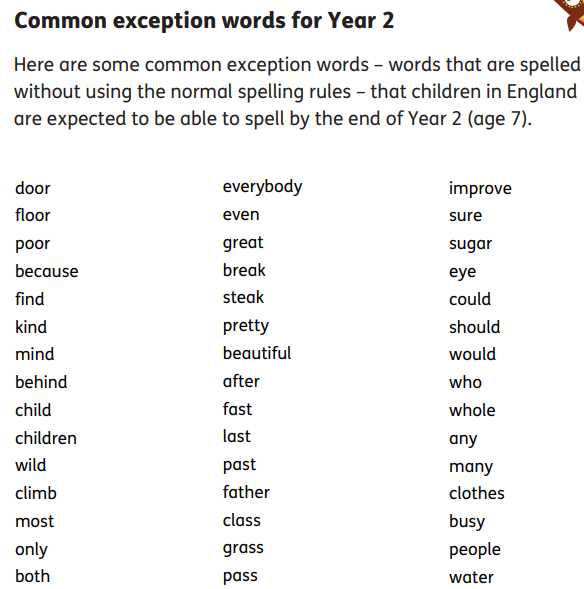
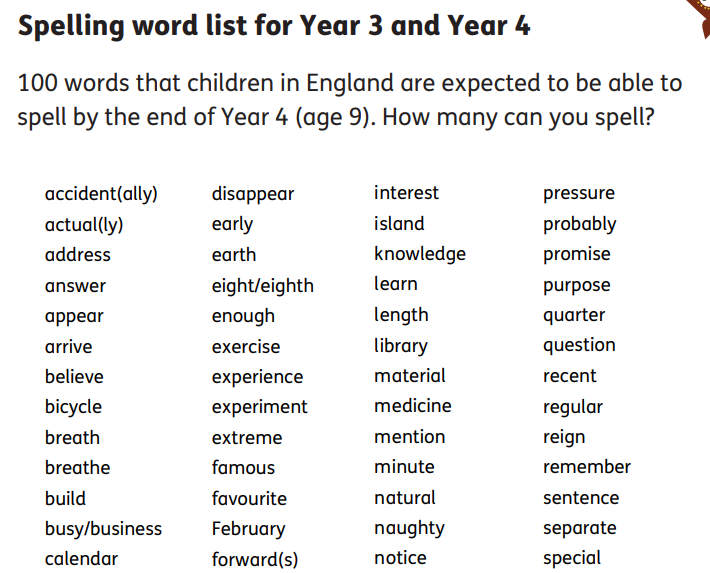
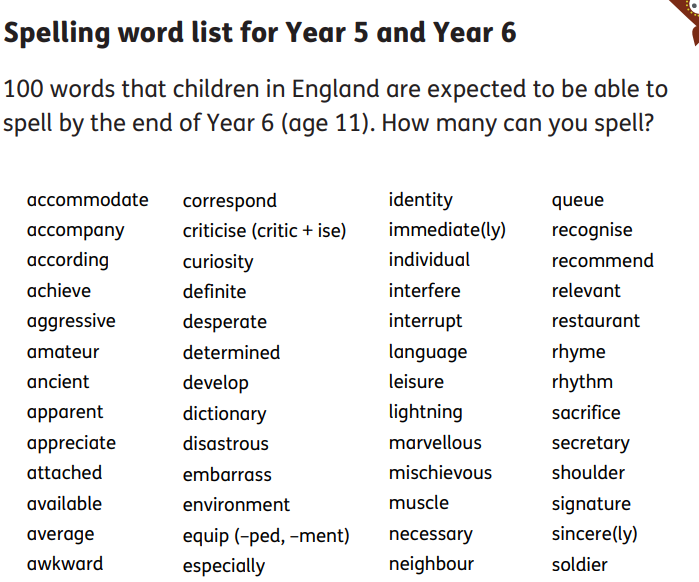
The word lists are statutory. The lists are a mixture of words pupils frequently use in their writing and those which they often misspell.
Year 1 Common Exception Words
Year 2 Common Exception Words
Year 3 and 4 Spelling List
Year 5 and 6 Spelling List
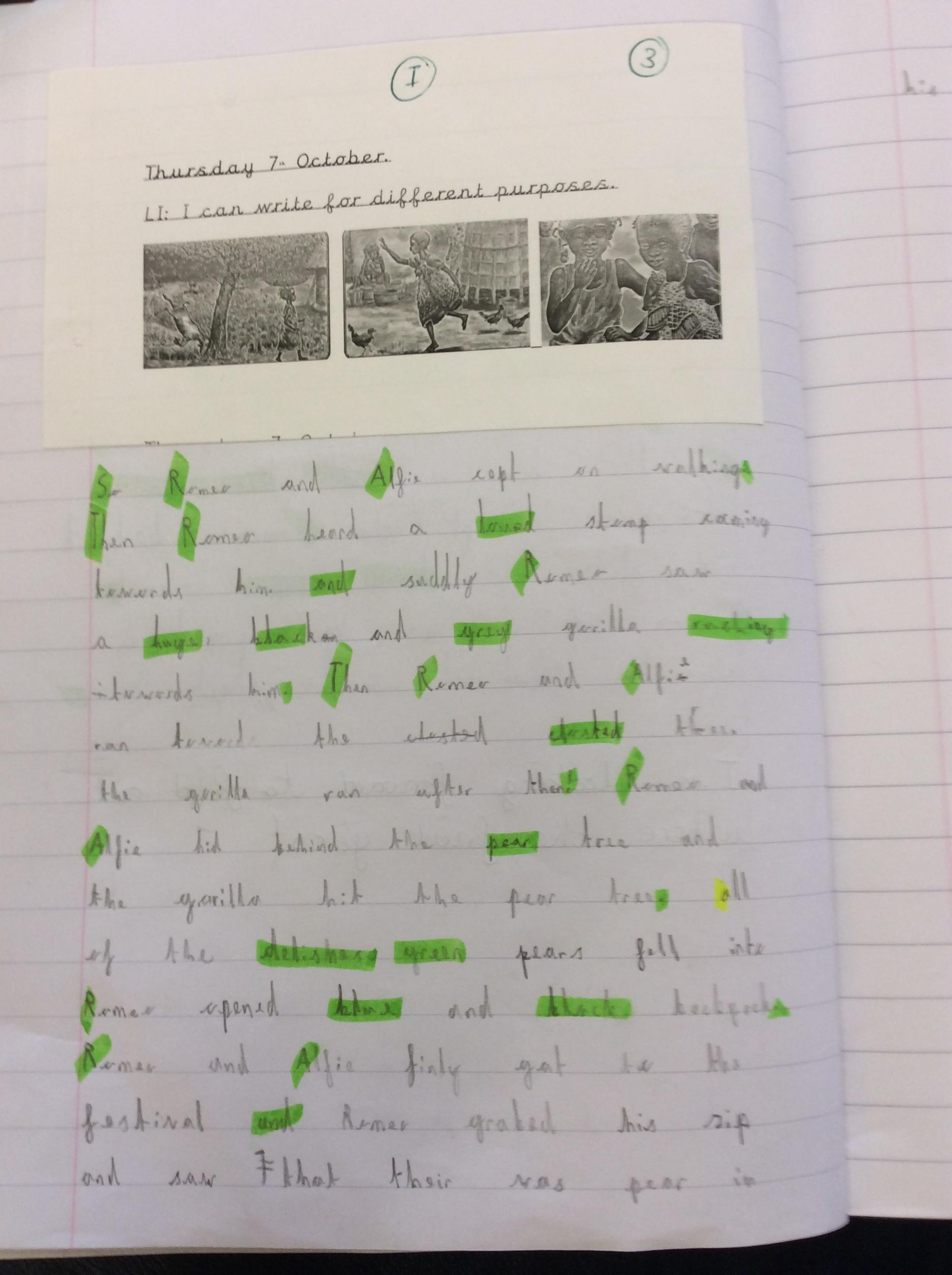
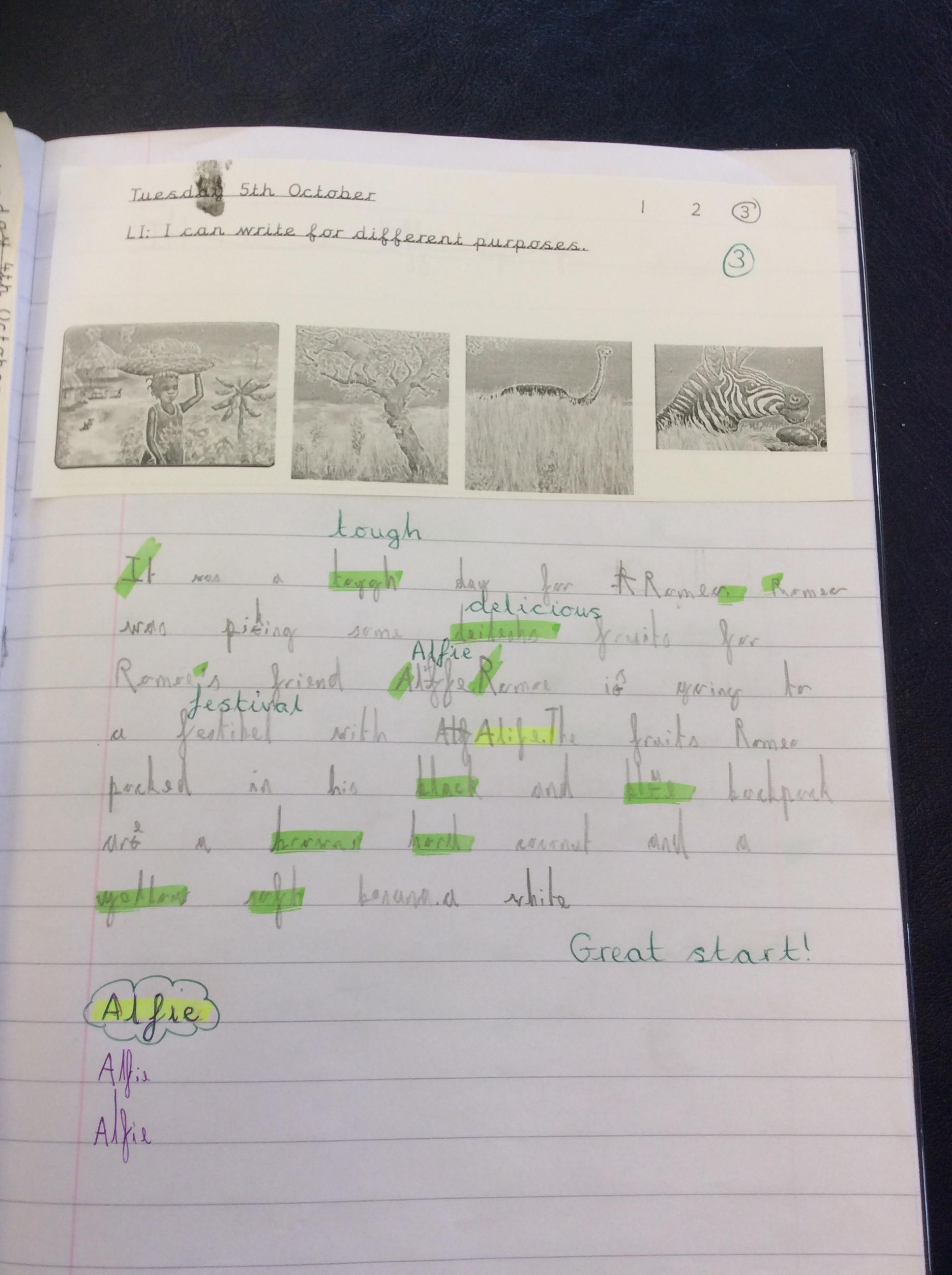
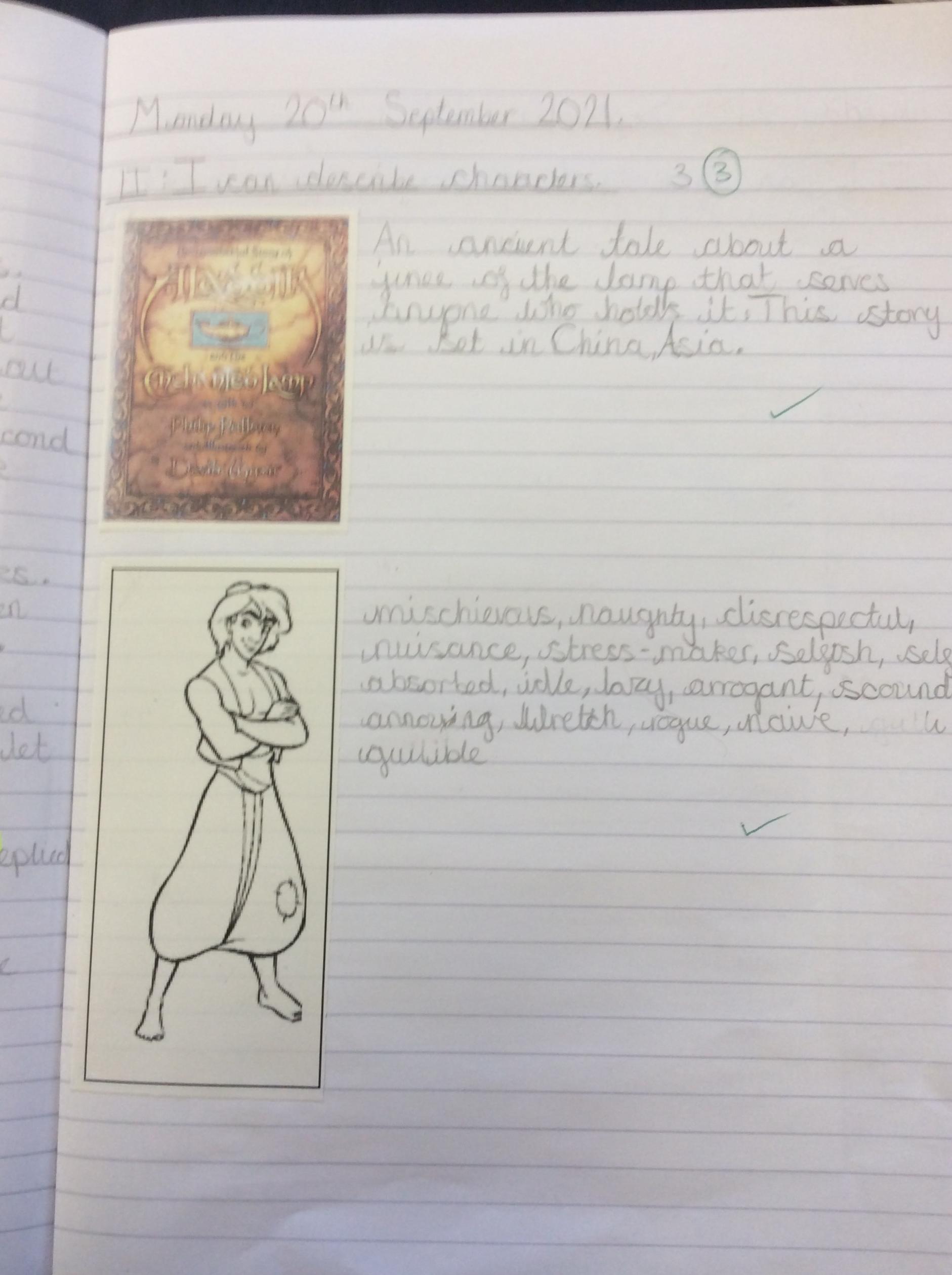
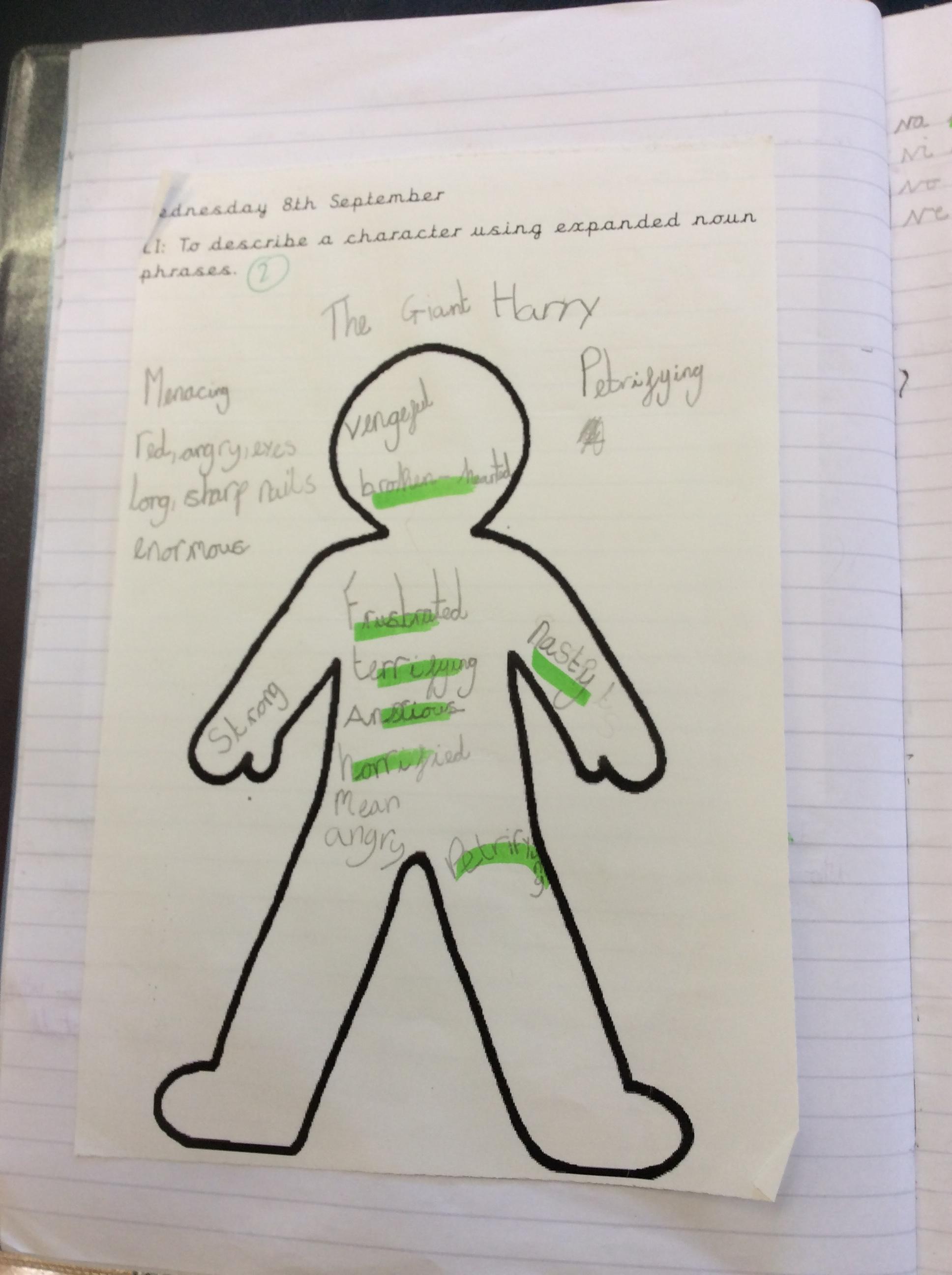
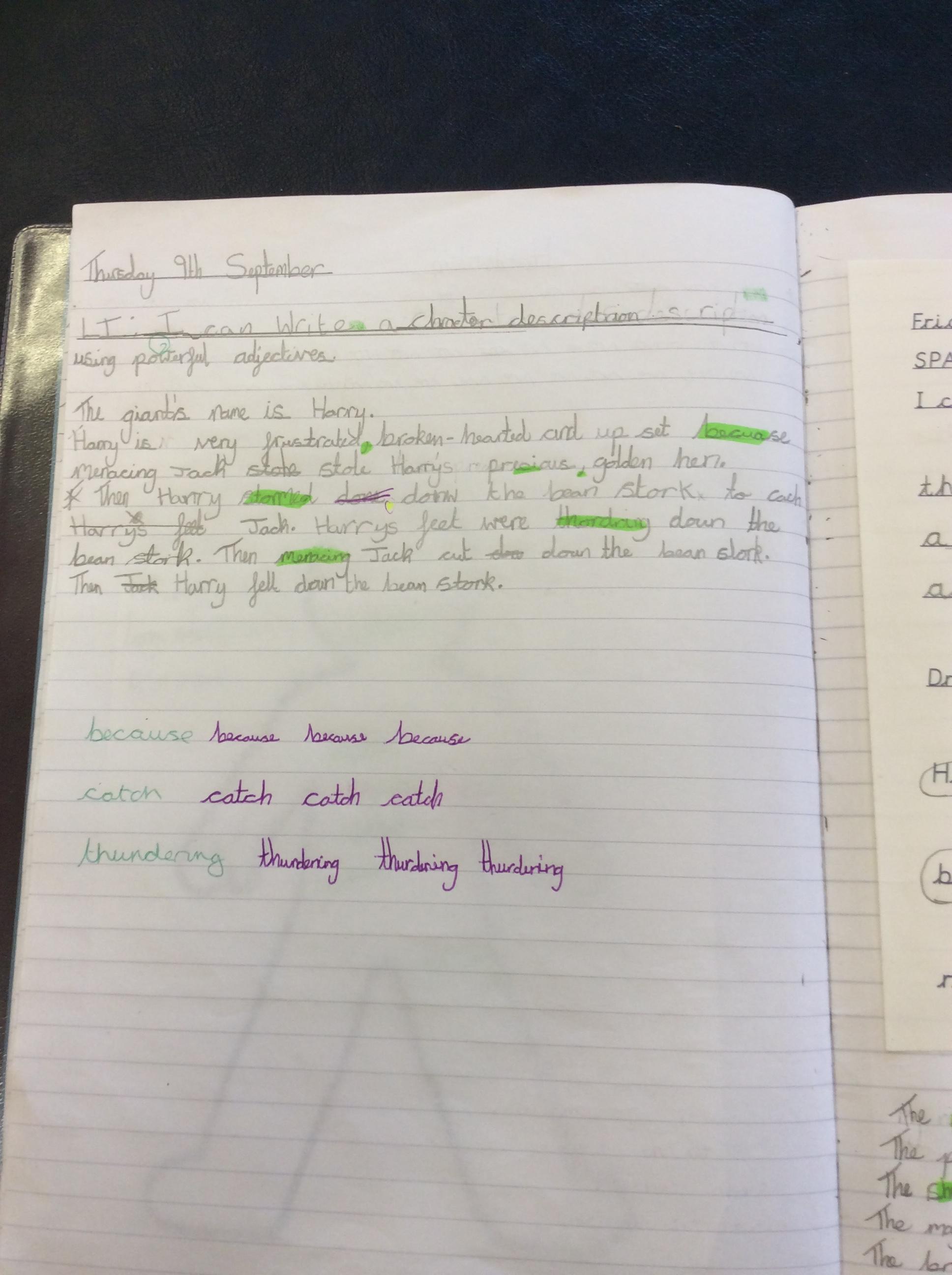
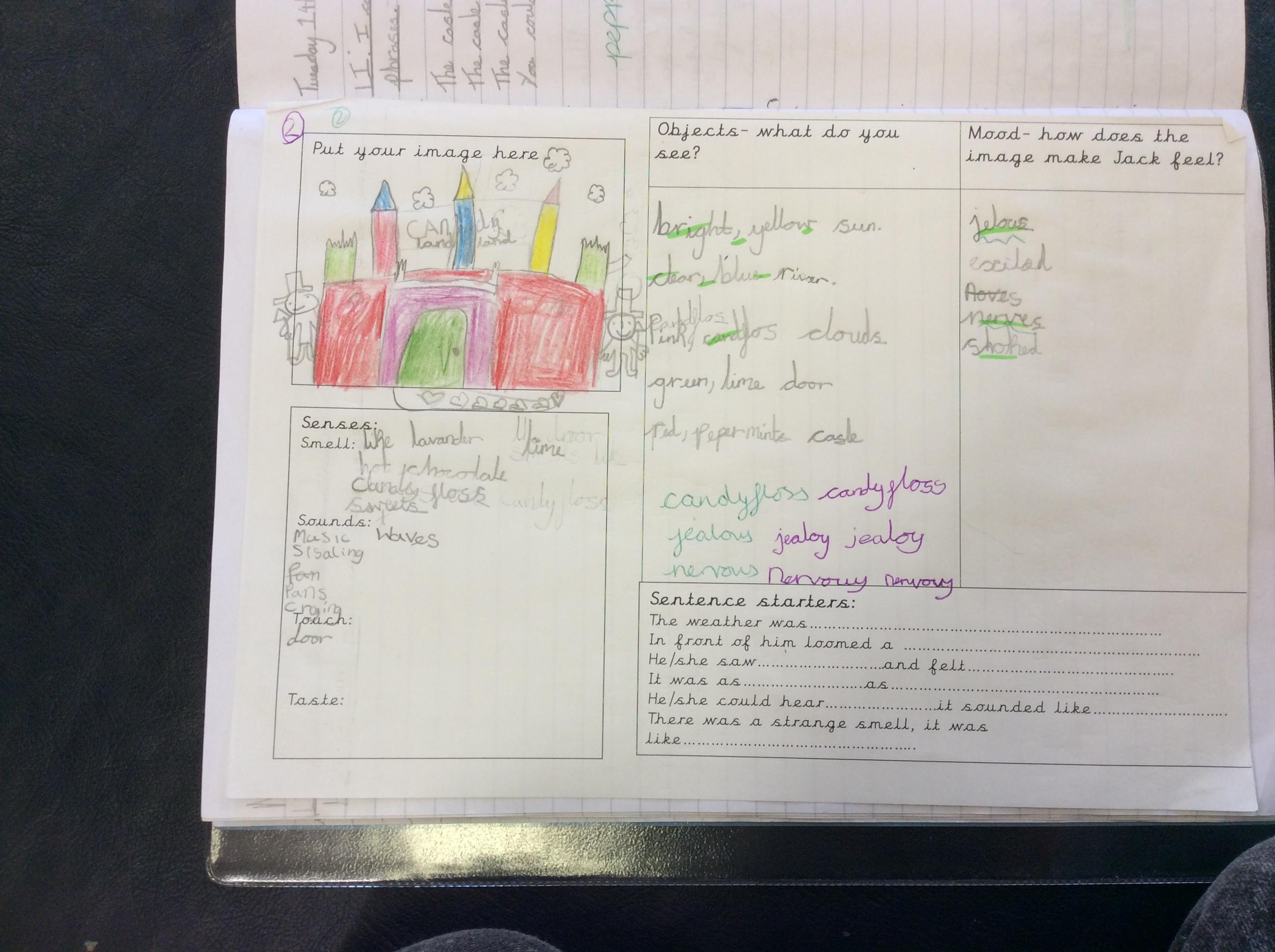
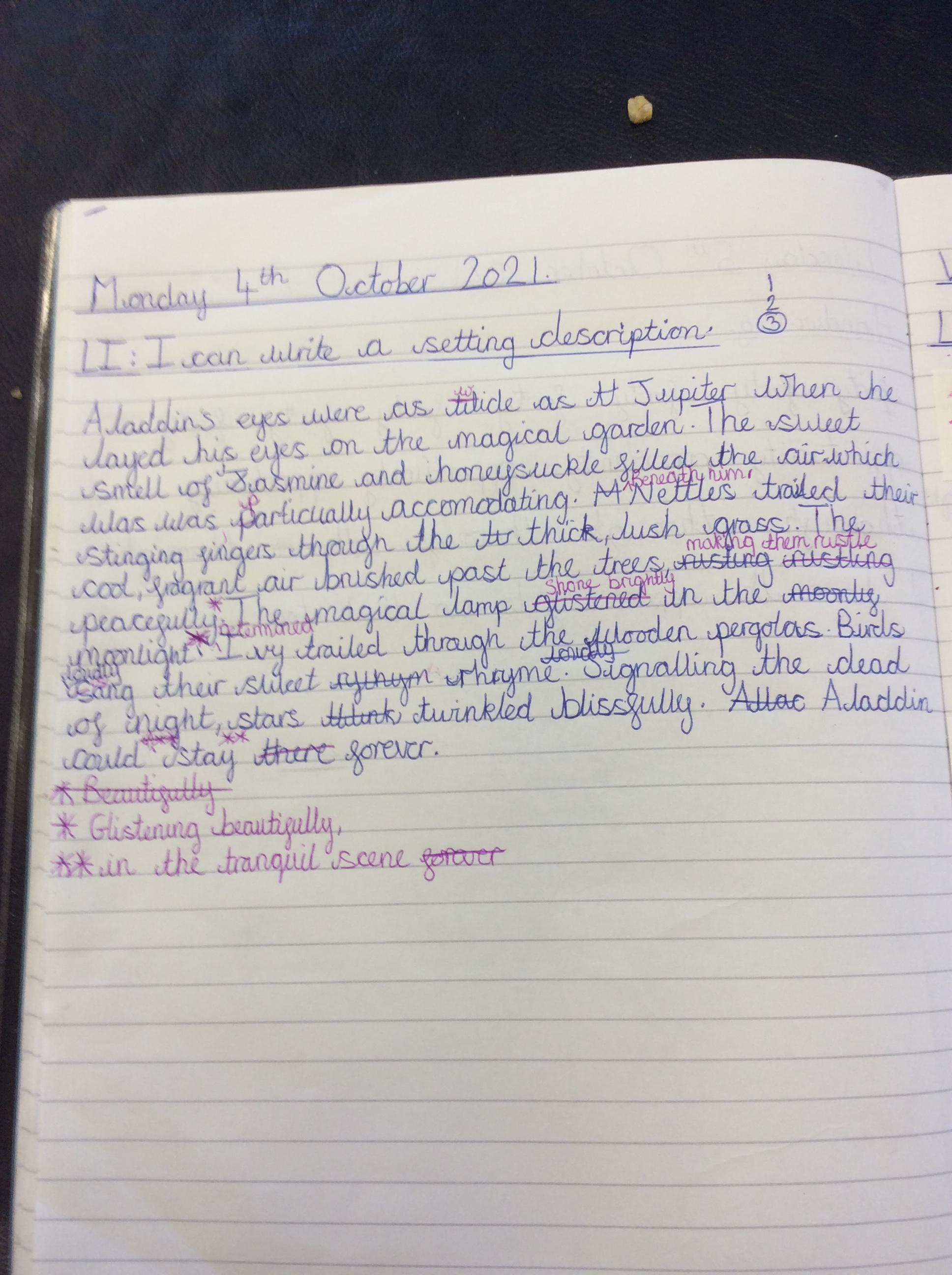
Reading to Writing Process

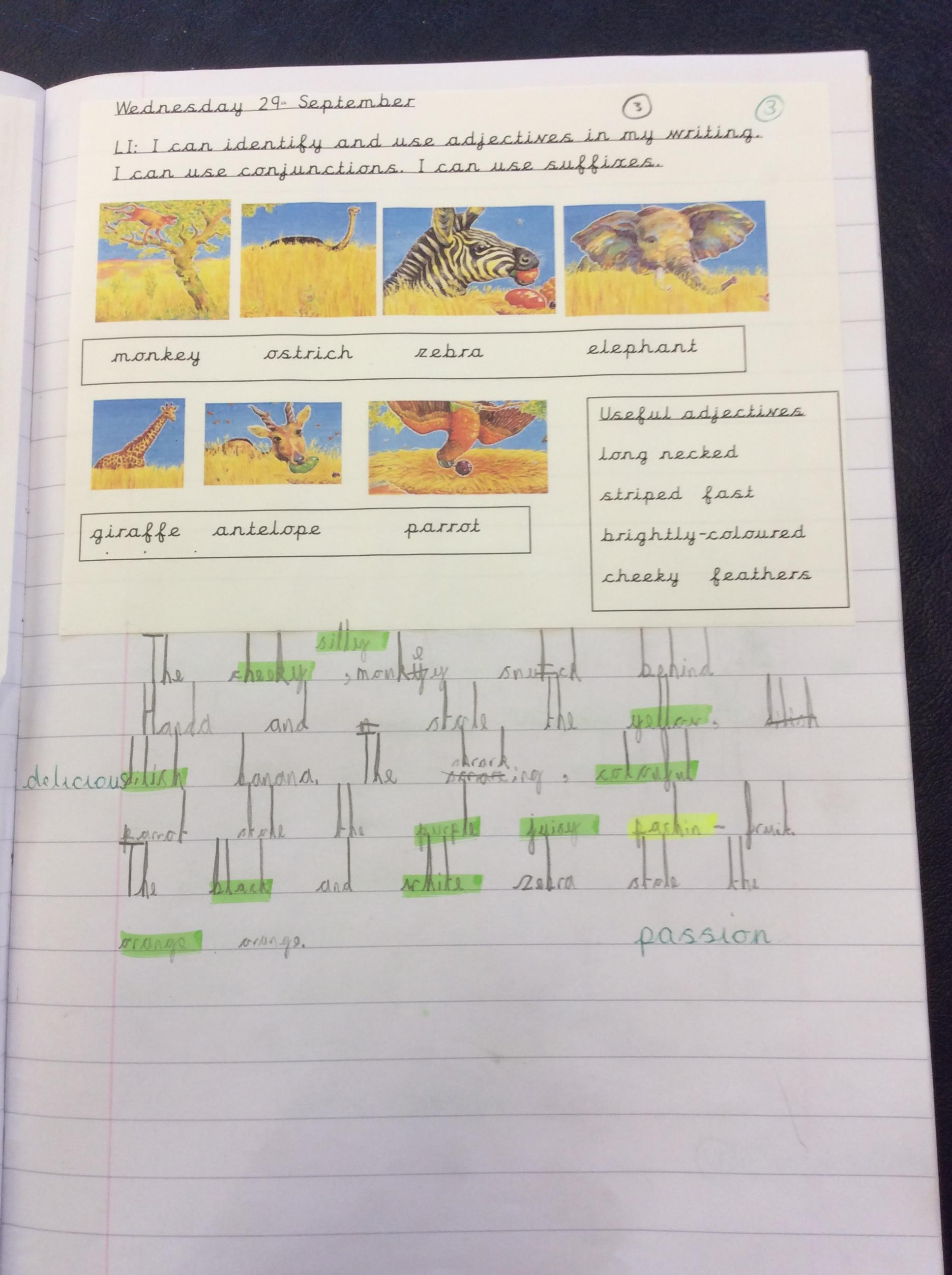

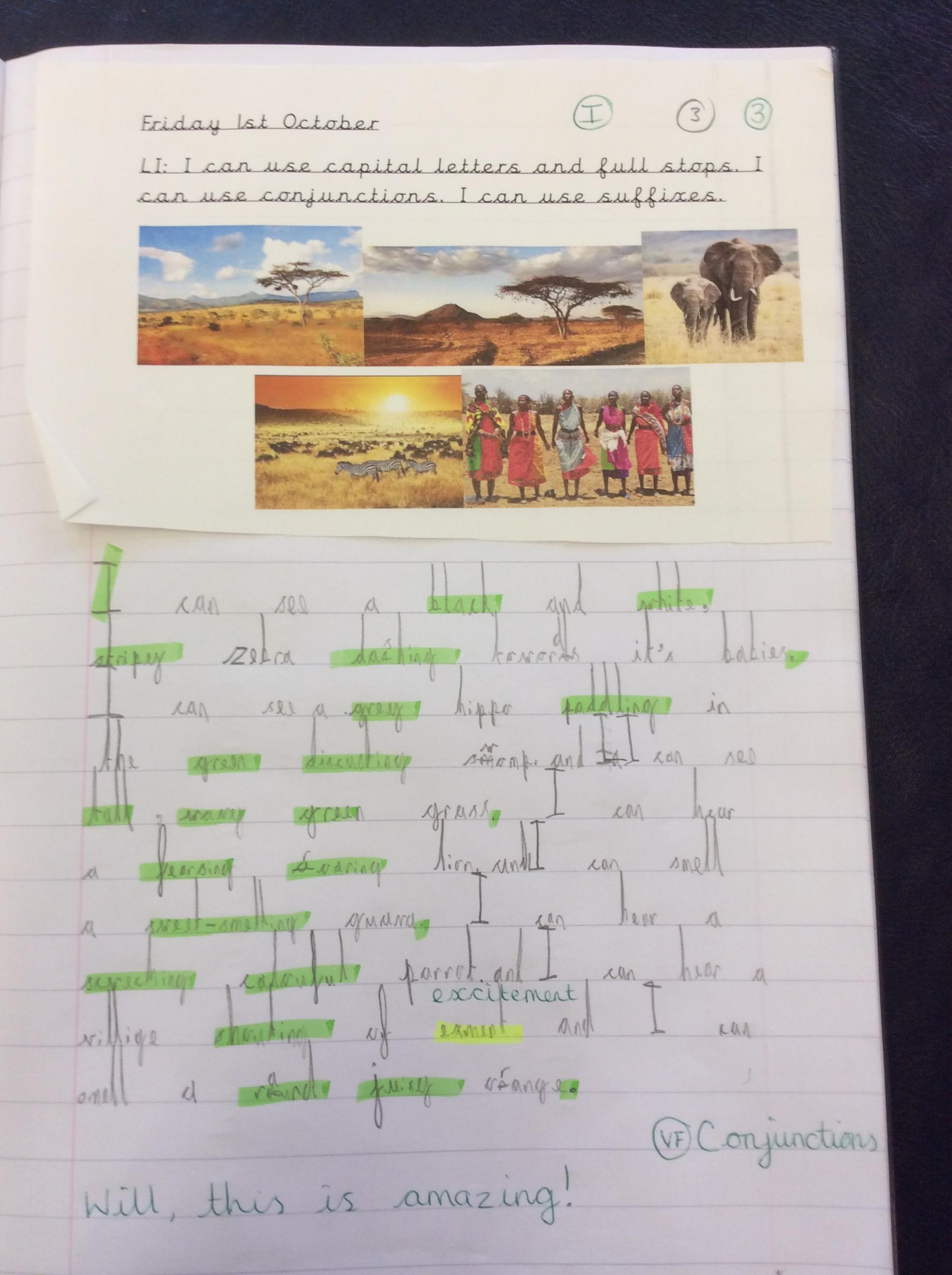
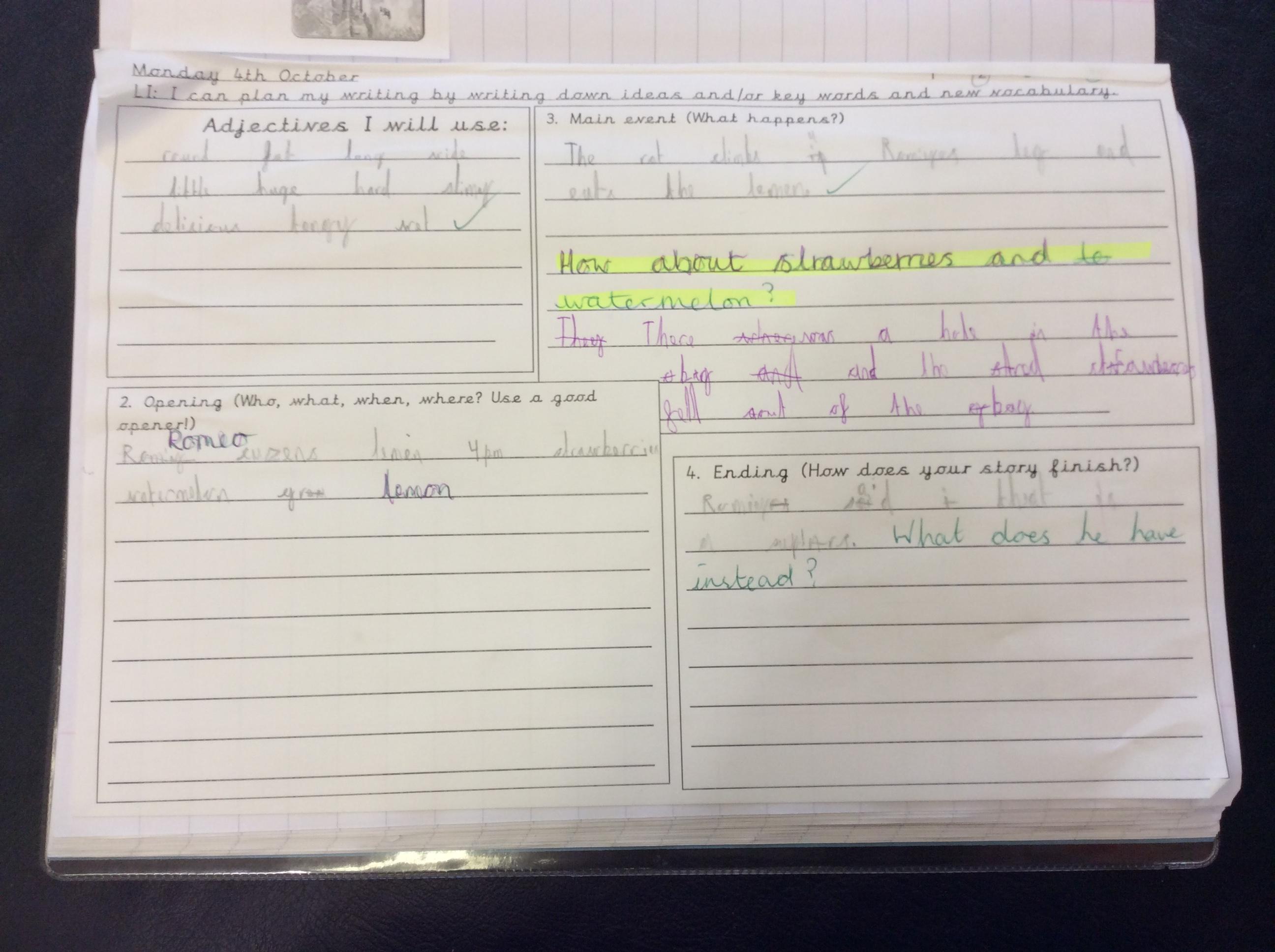
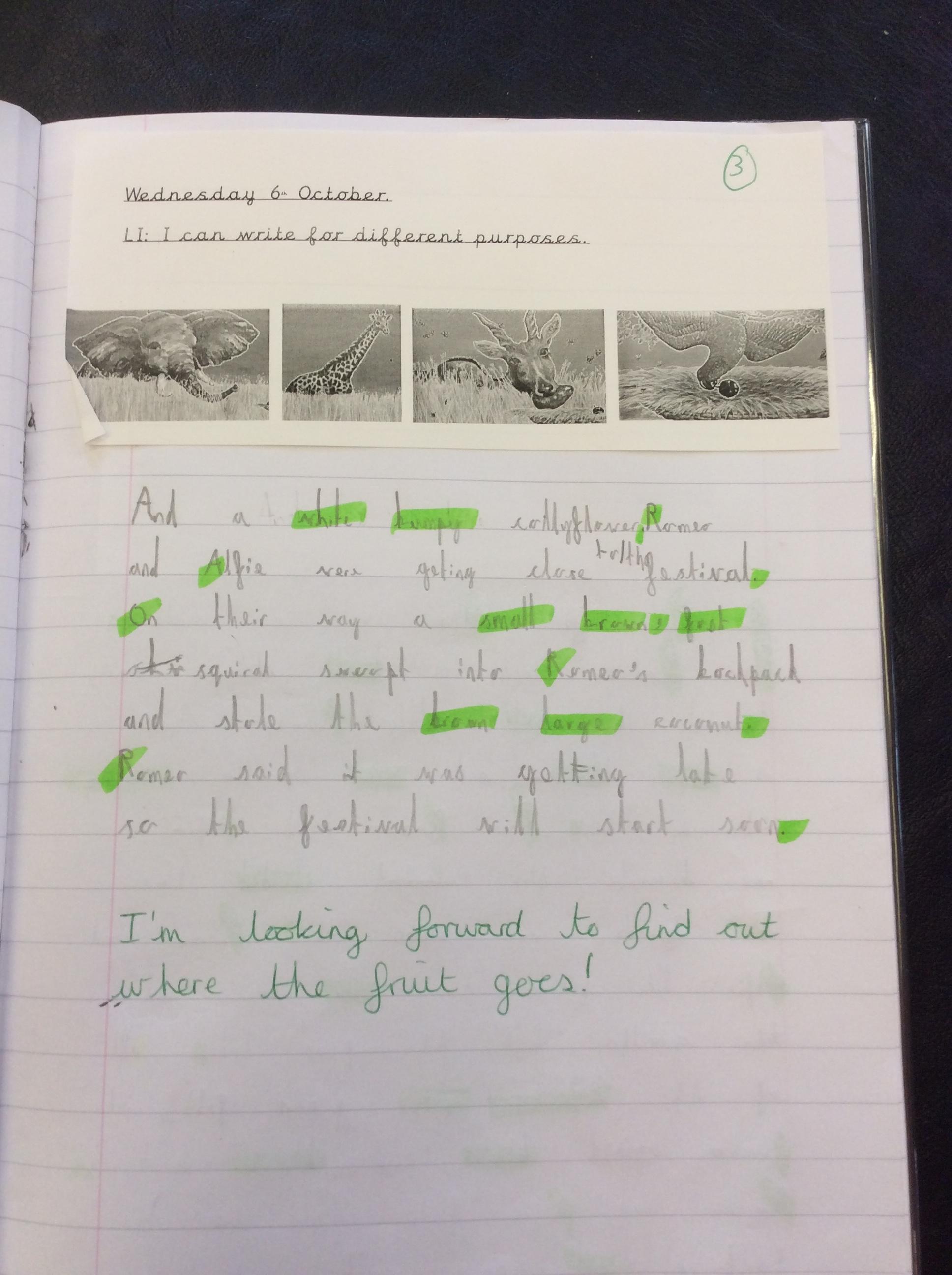


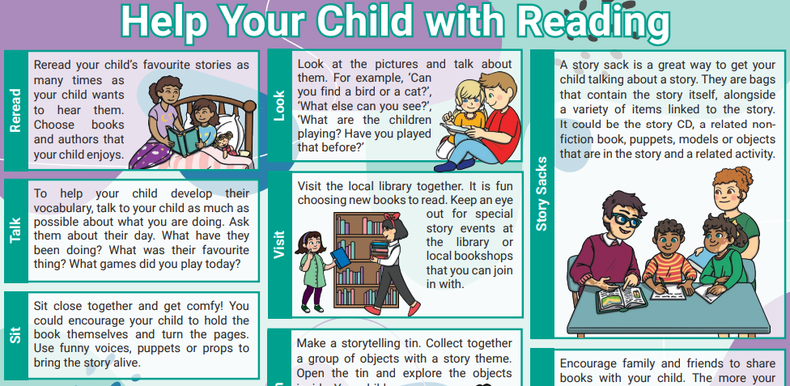
How to help at home
Reception

Key Stage 1
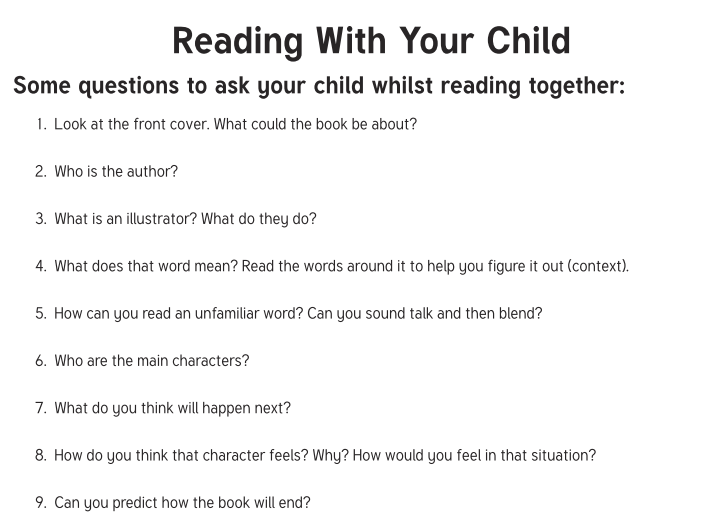
Key Stage 2
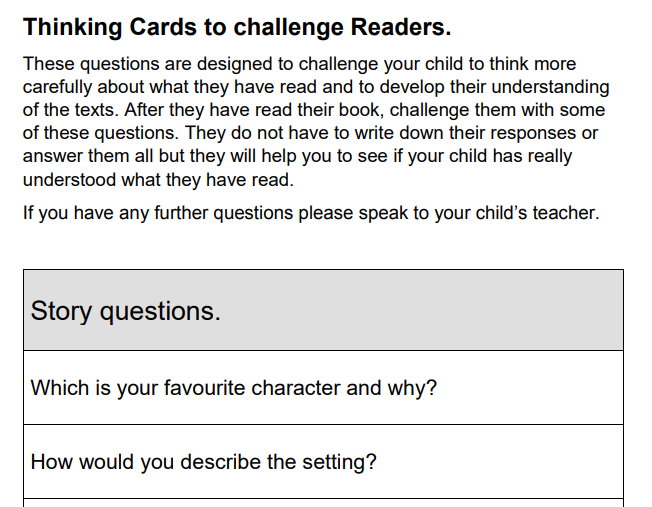
Useful websites and resources
Reading
Phonics
Writing
Grammar, Punctuation and Spelling